

Birth Trauma Awareness Week (13th-19th July 2026) is a time to draw attention to the subject of traumatic birth and the impact it has on women and their families. The theme of this year's awareness week is The Cost of Birth Trauma.
The arrival of a baby is a positive event for many parents. But for some, it can be a mixed experience or even traumatic.
Birth-related trauma can be physical or psychological, or a combination of both.
The impacts of birth-related trauma are often immense, long-lasting and widely felt. They affect not only the birthing parent living, but also their families, workplaces, communities and the broader economy.
What is Birth Trauma
Birth trauma is a way to describe symptoms of distress you might experience after having gone through, or witnessed, a traumatic birth.
All sorts of things can make birth traumatic, such as a difficult forceps birth, or an emergency caesarean, or a postpartum haemorrhage. Very long, difficult labours can be traumatic, as can short, intense ones. If your baby is born premature or ill, and has to spend time in special care, that can be traumatising too.
Sometimes, parents also say that the trauma of birth has been made worse by poor communication from the health professionals looking after them.
Birth Trauma and PTSD
In some cases, these symptoms of distress can be enough for a diagnosis of post-traumatic stress disorder (PTSD).
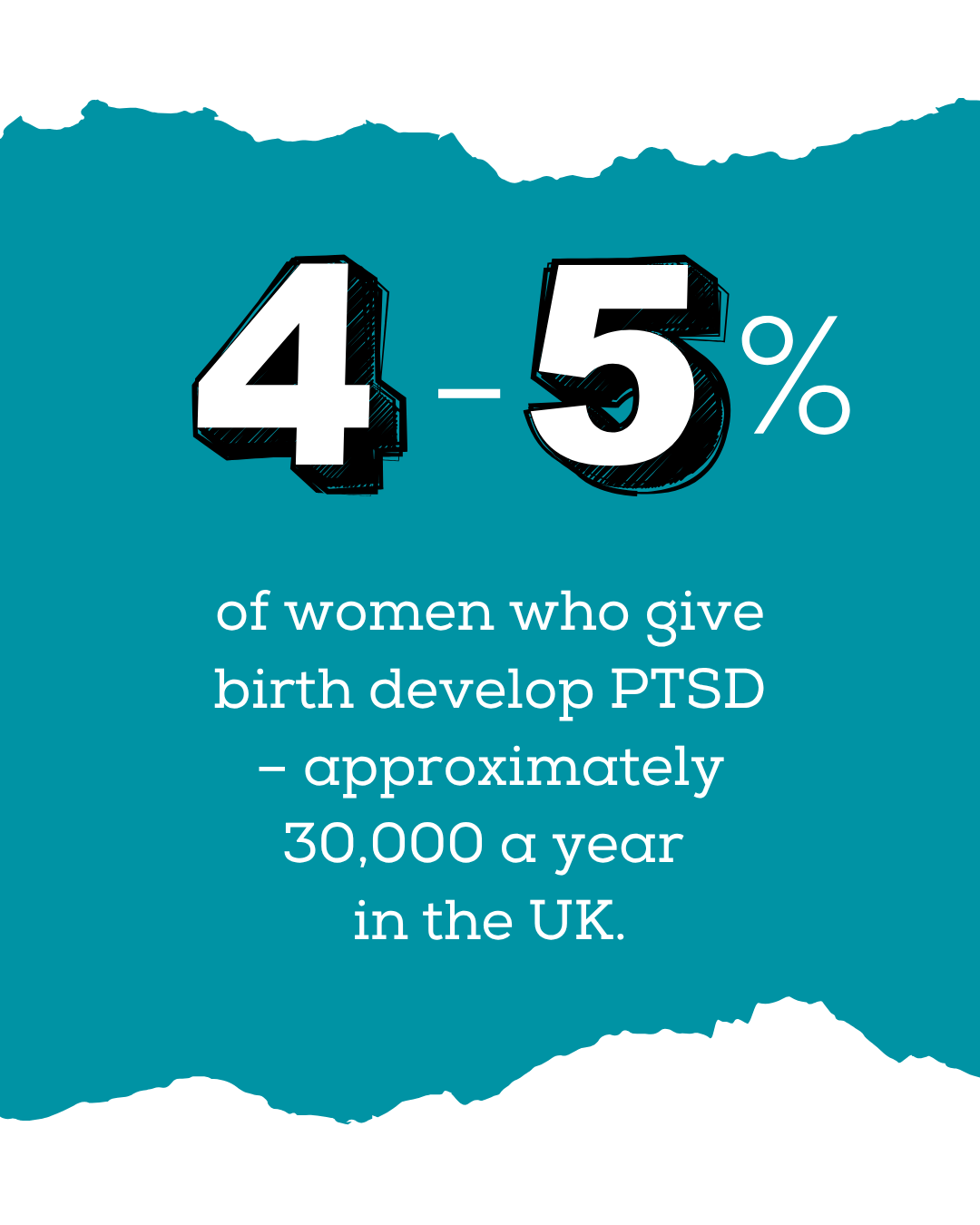
Research shows that about 4-5% of women experience PTSD after birth – about 25,000-30,000 a year in the UK.
PTSD has four groups of symptoms:
- Re-imagining the trauma: you may have nightmares or flashbacks to the birth
- Avoidance: you avoid any reminder of the trauma. For example, you may avoid going to the hospital where you gave birth or watching programmes such as Call the Midwife
- Arousal: you feel as if you’re on high alert at the time, and frightened that something bad is going to happen
- Negative cognition: your mood is low, and you may have feelings of guilt and self-blame, and you may have difficulty remembering parts of the trauma
Some people with PTSD also experience dissociation – a feeling of being emotionally numb or detached from reality.
A much bigger group of women experience some trauma symptoms, such as intense anxiety or flashbacks, but not enough for a PTSD diagnosis. The term “birth trauma” covers all these cases.
The Effects of Birth Trauma
It’s very common for women who have had a traumatic birth to find it hard to bond with their baby, who can serve as a reminder of the traumatic birth. It’s important to remember that for most women, even if they don’t feel a connection in the early stages, the bond develops over time. The chances are that, even if you don’t feel the rush of love you expected, you are still doing a good job of taking care of your baby. But you might find it helps to talk to other mums who have had a similar experience, or to seek professional help.
Birth partners can also develop PTSD from witnessing a traumatic birth. Research suggests that about 1% of dads or partners develop PTSD after seeing their partner go through traumatic birth.
You Are Not Alone
If you or someone you know is struggling after a traumatic birth, know this:
• Your feelings are valid.
• You're not overreacting.
• Help is available, and recovery is possible. Talking to others with similar experiences, reaching out to a therapist, or accessing peer support groups can be life-changing.
💬 Need Support?
Here are some great resources recommended by the Birth Trauma Association:
Websites
Bliss offers support for parents and families of premature and sick babies.
North London-based charity offering counselling to women in the perinatal period.
Five X More campaigns for better outcomes in maternity for Black women.
Make Birth Better also supports parents affected by birth trauma as well as professionals affected by vicarious trauma. Their email is staffed by mental health professionals (psychologists and a psychiatrist).
MASIC supports people who have experienced injuries as a result of birth.
PANDAS supports parents with prenatal or postnatal depression, as well as other perinatal mental health challenges. Its helpline is open Monday to Friday between 10am and 5pm.
PEEPS supports parents, families and friends of people who have experienced hypoxic-ischaemic encephalopathy (brain injury as a result of oxygen deprivation). It has lots of useful downloadable resources.
SANDS offers support to parents whose baby has died, whether that happened recently or long ago.
Books
Breaking the Taboo: Why we need to talk about birth trauma by Theo Clarke
Coping with birth trauma and postnatal depression by Lucy Jolin
Birth Shock: how to recover from birth trauma by Mia Scotland
Why birth trauma matters by Emma Svanberg
Birth Trauma: A guide for you, your friends and family to coping with post-traumatic stress disorder following birth by Kim Thomas
Postnatal PTSD: A Guide for Health Professionals by Kim Thomas with Shona McCann
If you're a parent living in Essex, you can also request Peer Support from us here at Parents 1st: https://parents1st.org.uk/essex-peer-support-services We are here for you at every stage of your parenting journey.